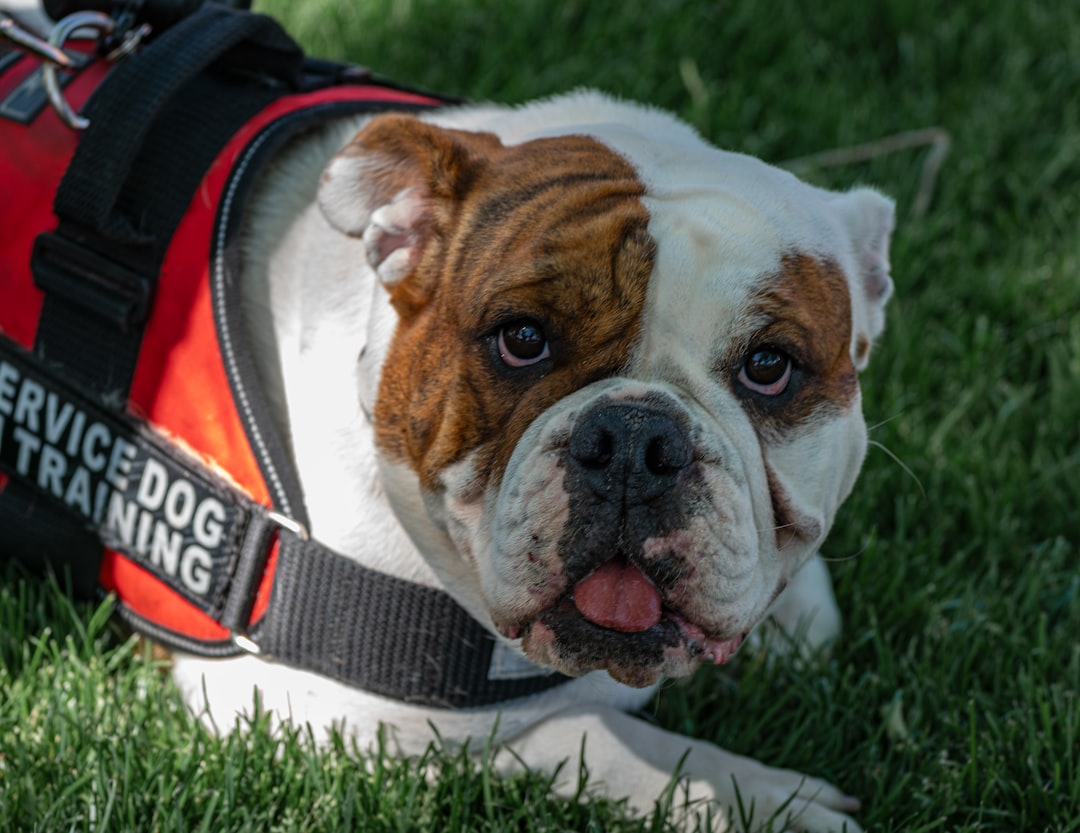
Verifying a handler-dog team at the point of access has always been a legally and technically complex problem. Federal law under the Americans with Disabilities Act prohibits requiring documentation as a condition of entry. Staff may ask only two questions. Yet fraudulent service dog claims continue to erode trust for legitimate teams and create liability exposure for businesses. Biometric authentication, applied correctly, offers a path that satisfies both the privacy interests of disabled handlers and the operational interests of access-granting entities. This article examines the technical architecture required to make that path work without violating federal guidance or creating new civil rights exposure.
Why Biometric Verification Is Entering the Service Dog Access Layer
Voluntary verification systems for handler-dog teams have existed in various forms for years. Printed cards, QR codes and digital certificates each carry a fundamental weakness: they authenticate a document, not a person or an animal. A QR code linked to a service dog profile proves nothing about who is holding the phone or which dog is present at the access point.
Biometric verification changes the assertion model. Instead of asking "does this credential exist in a database," the system asks "is the person presenting this credential the person enrolled in the credential, and is the animal the enrolled animal?" That distinction is the entire security value of biometric binding. Without it, verification portals are producing confidence in paper, not confidence in the team.
The push toward biometric approaches is also driven by two converging pressures. First, the proliferation of online letter mills selling fraudulent emotional support animal documentation has made document-only verification a reputational liability for operators. Second, machine learning advances in face recognition and animal biometric identification have brought the cost and latency of real-time matching to levels practical for mobile access workflows. As of 2026, handler-side face verification can execute sub-200ms on mid-range Android hardware without network round-trips, using on-device inference with quantized FaceNet-class models.
Template Storage Architecture and the Privacy Separation Problem
The most consequential architectural decision in any biometric system is where the biometric template lives. A biometric template is the mathematical representation of a face, fingerprint or iris extracted during enrollment. It is not the raw image. The raw image is discarded in privacy-compliant systems. The template is what the matching algorithm compares against at verification time.
Three storage topologies exist, and each carries distinct legal and operational risk.
Centralized server storage creates a high-value attack target. All templates in one database means a single breach exposes all enrolled handlers. Biometric data cannot be rotated like passwords. If a face template is compromised, the handler cannot issue themselves a new face. This topology is inappropriate for any system touching a protected class population, and disabled service dog handlers are explicitly a protected class under federal disability law.
Device-bound storage keeps the template on the handler's device, inside a hardware-backed secure enclave such as an ARM TrustZone partition or Apple Secure Enclave. The verification portal never receives the template. It receives only a cryptographic attestation that the on-device matcher accepted the presented biometric against the stored template. This is the architecture used by FIDO2/WebAuthn passkey infrastructure and is the appropriate baseline for handler-side verification.
Privacy-preserving server storage using homomorphic or tokenized templates is an emerging middle path. Tokenized biometric schemes apply an irreversible transformation to the template before storage, similar in concept to password hashing but with matching properties preserved. Research published in IEEE Transactions on Information Forensics and Security has demonstrated that cancelable biometric transforms can allow server-side matching while ensuring that the stored artifact cannot be reversed to reconstruct the original biometric. For infrastructure where device-bound storage is impractical at scale, cancelable template architectures are the current best practice.
At TheraPetic®, the verify.mypsd.org infrastructure follows a device-first design. Handler biometric data is enrolled and matched locally. The verification assertion transmitted to the access portal is a signed token containing the team identifier and a timestamp-bound match confidence score. No biometric template traverses the network.
Liveness Detection and the Presentation Attack Surface
A biometric face matcher that accepts a photograph defeats the entire security model. Presentation attacks, where an adversary presents a 2D print or replay video of an enrolled handler's face, are the most common attack vector against face-based access systems. In the handler-dog team context, a fraudulent actor could theoretically photograph a legitimate handler, enroll their own fraudulent team, and then present the photograph at access points.
Liveness detection, also called presentation attack detection (PAD) in ISO/IEC 30107-3 terminology, is the technical control that prevents this. Modern PAD approaches fall into two categories.
Passive liveness analyzes a single frame or short video clip for physiological signals that printed photographs cannot reproduce. Micro-texture analysis looks for the specular reflectance patterns of live skin versus the uniform surface of paper or screen. Blood flow estimation using remote photoplethysmography (rPPG) detects subtle pixel-level color oscillations driven by cardiac cycles. Depth inference from monocular video uses learned priors about 3D facial geometry to detect the flatness of a printed attack. These passive signals are processed entirely client-side in modern on-device implementations, adding minimal latency.
Active liveness prompts the user to perform a randomized challenge, such as blinking, turning their head or smiling on command. The randomization defeats replay attacks using pre-recorded video. Active challenges introduce user experience friction, which makes passive liveness preferable for high-volume access scenarios. For enrollment flows that happen once per team registration, active liveness provides a stronger assurance baseline and the added friction is acceptable.
ISO/IEC 30107-3 defines attack presentation classification error rate (APCER) and bona fide presentation classification error rate (BPCER) as the primary evaluation metrics. Any production deployment should target APCER below 2% and BPCER below 5% under the testing conditions defined by the iBeta PAD conformance testing standard, which is the current industry reference for commercial liveness systems.
Dog-Side Biometrics: Identifying the Animal Without Requiring Documentation
Handler authentication addresses half of the team verification problem. The other half is confirming that the specific dog present at the access point is the enrolled animal. This is the genuinely novel frontier of handler-dog team biometrics.
Canine biometric identification leverages two primary modalities: nose print recognition and facial morphometry. Dog nose prints, like human fingerprints, are unique and stable across the animal's life. Research teams at the University of Bradford and commercial ventures including PetPrint and HandlerID have demonstrated nose print matching accuracy exceeding 97% in controlled conditions using convolutional neural network architectures trained on large-scale canine nose print datasets. The capture workflow requires only a smartphone camera and a cooperative animal, making it practical for field enrollment.
Canine facial recognition takes a different approach, analyzing the geometric relationships between muzzle width, interocular distance, ear placement and skull shape. Computer vision models fine-tuned on breed-stratified datasets can achieve sufficient accuracy to distinguish individual animals within common service dog breeds including Labrador Retrievers, Golden Retrievers and German Shepherds. Breed homogeneity within service dog populations actually simplifies the hard negative mining problem during training, since the model must learn fine-grained within-breed distinctions.
At servicedog.ai, the companion AI infrastructure developed by TheraPetic® incorporates both nose print and facial morphometric embeddings into a fused canine identity token. The fusion approach, combining modality scores via a learned ensemble, improves robustness against lighting variation and animal movement compared to single-modality systems. A handler presenting at a verification portal can initiate a live canine biometric capture in under 30 seconds using a standard smartphone camera workflow.
ADA Documentation Non-Requirement Doctrine and Biometric Compliance Boundaries
The ADA documentation non-requirement doctrine is the most important legal constraint on any service dog verification system. Under current federal law, businesses subject to Title II and Title III of the ADA may not require a person with a disability to provide documentation that their dog is a trained service animal as a condition of access. Staff may ask only two permissible questions: whether the dog is a service animal required because of a disability, and what work or task the dog has been trained to perform.
Biometric verification systems must be designed so that participation is strictly voluntary and refusal carries no access penalty. A handler who declines to use a biometric verification portal at a hotel, restaurant or transit system must be offered the same two-question verbal inquiry that federal law already requires. Biometric verification is an enhancement to the trust ecosystem, not a replacement for the legal baseline, and it cannot be made mandatory without triggering ADA Title III liability.
The DOJ's guidance documents on service animal access, maintained by the ADA National Network and referenced in HUD's companion policy frameworks, reinforce that documentation requirements in any form, digital or paper, cannot be a gatekeeping condition. The legal value of biometric verification systems is therefore reputational and operational rather than compliance-replacing. Businesses can offer biometric enrollment to handlers who want to establish a trust record that reduces friction in future interactions. Handlers benefit from a verifiable identity assertion that staff can consult without asking invasive questions. The system adds value on both sides without creating a documentation mandate.
For healthcare facility operators, the calculus is slightly different. HIPAA applies when biometric data is associated with a patient record and used in a covered healthcare context. Any biometric verification system deployed within a covered entity must apply HIPAA Safe Harbor deidentification under 45 CFR 164.514(b) to the biometric identifiers before those identifiers can be used for any secondary purpose. The 18-identifier Safe Harbor list explicitly includes biometric identifiers including finger and voice prints. Facial geometry embeddings are biometric identifiers within the scope of that definition, and any system that links a handler's biometric template to a medical record or clinical encounter must treat that linkage as protected health information.
How TheraPetic® Infrastructure Approaches Handler-Dog Team Verification
TheraPetic® Healthcare Provider Group operates as a 501(c)(3) nonprofit healthcare provider with clinical infrastructure designed around the intersection of behavioral health documentation and service animal verification. The HANK AI system at verify.mypsd.org serves as the verification portal layer for handler-dog teams whose service dog status has been assessed through TheraPetic®'s Licensed Clinical Doctor network.
Within that infrastructure, biometric verification operates on a consent-first model. Handlers who enroll in biometric verification during their clinical intake process receive a device-bound credential that pairs their on-device face match with their enrolled canine biometric token. The credential is issued only after a Licensed Clinical Doctor has completed the clinical assessment supporting the handler's service dog need. The biometric layer authenticates the team identity. The clinical layer authenticates the legitimacy of the disability-related need. These are distinct functions and neither substitutes for the other.
The data governance layer for biometric identifiers is managed through mydatakey.org, TheraPetic®'s HIPAA-aligned data governance framework. Handlers retain the right to revoke their biometric enrollment at any time, which triggers cryptographic invalidation of the issued token and deletion of the enrollment template from any server-side artifact storage. Revocation is processed within 24 hours per the system's published data retention policy.
The network hub at therapetic.net provides the trust federation layer that allows a credential issued through mypsd.org to be recognized by partner operators in the healthcare, hospitality and transit sectors. The federation protocol uses signed JWTs with short expiration windows, binding the credential to both the handler's device attestation and a timestamp that prevents replay across sessions.
Deployment Considerations for Healthcare and Hospitality Operators
Operators considering biometric verification infrastructure for handler-dog team access should evaluate the system against four criteria before deployment.
Voluntary participation design. The enrollment and verification flow must make it unambiguous that biometric participation is optional. The fallback to ADA-compliant two-question verbal inquiry must be the default path, with biometric verification offered as an alternative that benefits the handler. Any UI pattern that makes the biometric path feel mandatory, such as hiding the verbal inquiry option or presenting it as a last resort, creates ADA exposure.
Template minimization. The system should capture only the minimum biometric data needed for team identification. Face geometry embeddings should be stored at the lowest dimensionality that preserves matching accuracy. Raw images should never be stored after template extraction. Canine biometric captures should follow the same minimization principle.
Liveness assurance level. The PAD implementation should be evaluated against iBeta Level 1 conformance at minimum. Level 2 conformance, which tests against 3D artifact attacks including silicone masks, is appropriate for high-security access scenarios. For typical hospitality and healthcare deployment, Level 1 passive liveness with active liveness at enrollment provides a proportionate assurance baseline.
Incident response for biometric breach. Because biometric identifiers cannot be rotated, the incident response plan must include immediate token revocation and re-enrollment, notification to affected handlers under applicable state biometric privacy statutes including Illinois BIPA, Texas CUBI and Washington's My Health MY Data Act as of 2026, and a plan for operating on the verbal inquiry baseline while the biometric system is suspended.
The technology is mature enough to deploy responsibly. The legal framework is clear enough to navigate. The remaining work is institutional: building enrollment trust with handler communities who have legitimate reasons to be cautious about sharing biometric data with any system, and demonstrating through transparent data governance that the system serves their interests rather than surveilling them.